
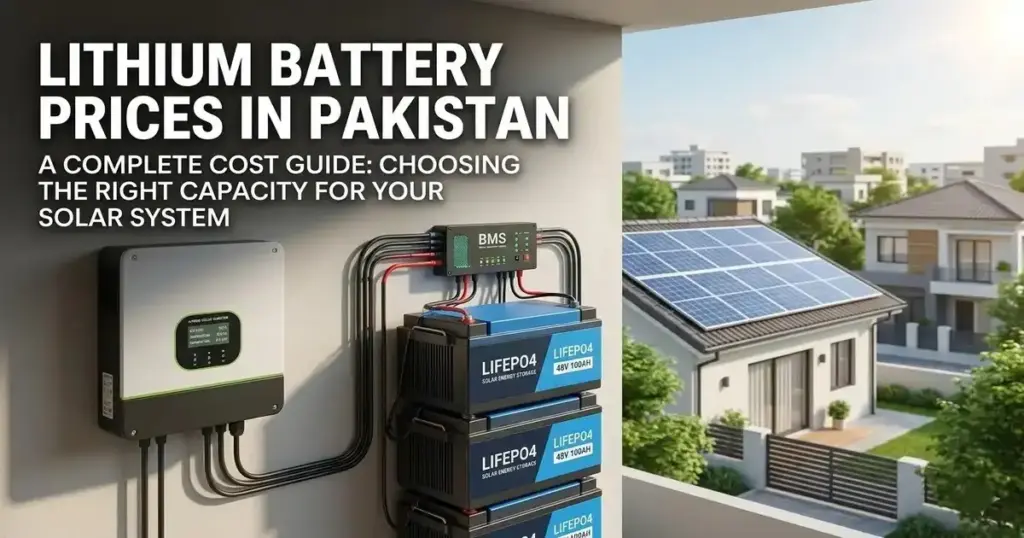
Lithium Battery Price In Pakistan
Pakistan is going through a quiet but powerful energy shift. With electricity bills touching record highs and load shedding still a daily reality in many cities, hundreds of thousands of households and businesses have turned to solar energy as a long-term solution. And at the heart of every reliable solar setup is a good battery. In recent years, lithium batteries have become the go-to choice for anyone serious about energy independence.
But before you make the investment, understanding lithium battery prices in Pakistan is essential. Prices vary significantly depending on capacity, chemistry, brand, and where you buy. This guide breaks everything down so you can make a confident, informed decision.
Why Lithium Batteries Are Taking Over Pakistan’s Solar Market
Not long ago, tubular lead-acid batteries were the standard for solar backup in Pakistan. They were affordable and widely available, but they came with real drawbacks: frequent maintenance, short lifespan of two to three years, heavy weight, and relatively poor performance in the intense heat of Pakistani summers.
Lithium batteries, particularly those using LiFePO4 (lithium iron phosphate) technology, solve most of these problems. They are virtually maintenance-free, significantly lighter, and can last anywhere from 8 to 15 years with proper use. They also offer a much higher depth of discharge, meaning you can use 80 to 100 percent of the stored energy without damaging the cells, whereas lead-acid batteries typically allow only 50 percent before performance degrades.
The higher upfront cost of a lithium battery is real, but when you calculate the total cost over a 10-year period, it almost always works out cheaper than replacing tubular batteries every two to three years. This long-term value is why demand for lithium solar batteries in Pakistan has grown dramatically since 2022.
Types of Lithium Batteries Available in Pakistan
When you walk into a solar shop or browse online, you will notice that lithium batteries come in different types and voltage configurations. Understanding these options will help you match the right battery to your inverter and energy needs.
LiFePO4 (Lithium Iron Phosphate) Batteries
These are by far the most common lithium batteries used in solar systems across Pakistan. LiFePO4 chemistry is known for its exceptional safety, as it is highly resistant to overheating and does not pose the same fire risk as older lithium technologies. They deliver a stable voltage output throughout the discharge cycle and operate reliably in the wide temperature range that Pakistan’s climate demands — from the cold winters of the north to the scorching summers of Punjab and Sindh.
Most quality LiFePO4 batteries offer between 3,000 and 6,000 charge cycles, which translates to a usable life of 8 to 15 years for a typical household. Popular brands available in Pakistan include Knox, Narada, Pylontech, Dyness, Itel, and Dongjin.
Standard Lithium-Ion Batteries
Standard lithium-ion batteries (using NMC or similar chemistries) have a higher energy density, meaning they store more energy in a smaller, lighter package. However, they are somewhat less tolerant of extreme temperatures and have a shorter cycle life compared to LiFePO4. They are more commonly found in portable power stations and smaller UPS applications rather than large residential solar setups.
24V vs. 48V Battery Systems
The voltage of your battery system must match your inverter. Most modern hybrid inverters in Pakistan operate on a 48V system, which is more efficient for larger home setups of 3 kW and above. Smaller inverters may use 24V battery banks. A 48V lithium battery pack typically consists of 51.2V nominal LiFePO4 cells and is the standard for most residential solar installations today.
Lithium Battery Price in Pakistan: Current Market Rates
Prices in Pakistan’s solar market are influenced by the global lithium carbonate price, the Pakistani Rupee exchange rate against the US Dollar, customs duties, and brand-specific warranties. The good news is that global lithium prices have come down significantly from their 2022 peak, making lithium batteries more accessible than ever before. That said, early 2025 saw the Customs Directorate in Karachi revise valuation rates for imported batteries to address under-invoicing, which has had a modest upward effect on some retail prices.
Here is a general overview of current lithium battery prices in Pakistan, keeping in mind that these are approximate figures and can vary by vendor and region:
A 12V 100Ah LiFePO4 battery, suitable for small off-grid setups, typically costs between PKR 100,000 and PKR 160,000. For a 24V 100Ah unit, expect to pay in the range of PKR 130,000 to PKR 190,000. The most commonly sold size for home solar systems, the 51.2V 100Ah (5.12 kWh) battery, is priced between PKR 190,000 and PKR 290,000 depending on the brand. High-capacity options such as 51.2V 200Ah (10.24 kWh) packs can range from PKR 430,000 to PKR 600,000 or more.
Premium international brands like Pylontech and BYD tend to sit at the higher end of these ranges, while trusted but more affordable options like Knox, Itel, and Dongjin offer competitive pricing without sacrificing essential quality standards.
If you are comparing options, you can browse a curated selection of lithium batteries at PakSolarShop, where prices are regularly updated to reflect current market rates.
What Affects the Price of a Lithium Battery?
Several factors determine why one lithium battery costs more than another. Understanding these will save you from making a poor purchase.
Capacity is the most straightforward factor. A larger battery with more kilowatt-hours of storage will always cost more. But beyond capacity, battery chemistry and brand play a significant role. A LiFePO4 battery with 6,000 certified cycles from a well-known brand will cost more than a generic one rated for 2,000 cycles — and rightly so, because the former offers far better value over time.
Warranty length is another key indicator. Reputable brands offer warranties of 5 to 10 years, which reflects their confidence in the product. Batteries with shorter warranties are often made with lower-grade cells and will not deliver the advertised cycle life in real-world conditions.
Import costs and currency fluctuations also add to the final retail price. Since most lithium batteries sold in Pakistan are imported from China, any weakening of the Rupee against the Dollar pushes prices up. Buying during a period of relative currency stability can result in better deals.
Finally, the integrated Battery Management System (BMS) matters more than most buyers realise. A quality BMS protects against overcharging, deep discharge, overheating, and short circuits. It is what keeps your battery safe and extends its operational life. Always verify that the battery you are buying has a built-in BMS with proper certifications.
LiFePO4 Battery Price in Pakistan: Is It Worth the Premium?
Many buyers ask whether they should spend the extra money on a LiFePO4 battery compared to a cheaper lithium-ion alternative. In the context of solar energy storage in Pakistan, the answer is almost always yes.
The operating temperature range of LiFePO4 is between -20°C and 60°C, which makes it far better suited to Pakistan’s climate than standard lithium-ion cells that can struggle above 45°C. During the summer months in cities like Multan, Hyderabad, or Jacobabad, where outdoor temperatures can exceed 45°C, this thermal resilience becomes critically important.
The cycle life advantage is equally compelling. A good LiFePO4 battery rated for 4,000 to 6,000 cycles, used once a day, will last over 10 years. A standard lithium-ion battery rated for 500 to 1,000 cycles may need replacing within 3 years under the same conditions. Over a decade, the LiFePO4 battery almost always represents the lower total cost of ownership.
To explore LiFePO4 battery options suitable for both residential and commercial use, visit the solar battery collection at PakSolarShop.
How Many Batteries Do You Need for Your Home?
This is a practical question that depends on your energy consumption, the size of your solar inverter, and how many hours of backup you need during load shedding or at night.
For a modest home running fans, lights, a refrigerator, and a few other appliances with a 3 kW hybrid inverter, a single 51.2V 100Ah (5 kWh) LiFePO4 battery typically provides 4 to 6 hours of backup depending on the load. If you need backup through the night or have higher consumption — air conditioning units, water pumps, or a larger home — you may need two or three batteries connected in parallel.
For a 5 kW system serving a medium-sized household, two units of 5 kWh each is a commonly recommended starting point. Larger homes or small businesses running 24/7 often go for 10 to 20 kWh of total storage.
It is always advisable to have a qualified solar technician assess your actual load before purchasing. Buying more capacity than you need wastes money, while under-sizing leaves you without power when you need it most.
Top Lithium Battery Brands in Pakistan
The market in Pakistan has matured considerably over the past few years, and several reliable brands have established strong reputations.
Pylontech is widely considered the benchmark for residential LiFePO4 batteries in Pakistan. Their products are widely supported by most major hybrid inverters including Growatt, Solis, Goodwe, and Inverex. Narada is another trusted name with a long history in energy storage and offers solid performance at competitive prices. Knox has earned a strong following in the local market for its reliability and local after-sales support. Itel and Dongjin offer value-oriented options that perform well for budget-conscious buyers without compromising on core safety features. For buyers seeking premium performance, BYD and Dyness represent the higher tier.
When evaluating any brand, always ask for the cycle life rating, operating temperature range, warranty terms, and whether the battery is compatible with your specific inverter model. A battery that is not compatible with your inverter’s communication protocol may not charge or discharge optimally.
Lithium Ion Battery 12V 200Ah: A Popular Choice for Off-Grid Systems
The 12V 200Ah lithium ion configuration deserves a dedicated mention because it remains a popular choice for smaller off-grid setups, agricultural applications, and as a replacement for traditional lead-acid battery banks. Whether it is a solar-powered tube well, a remote cabin, or a small shop with limited grid access, this configuration offers a practical and manageable entry point.
A genuine 12V 200Ah LiFePO4 battery from a reputable brand in Pakistan is typically priced between PKR 100,000 and PKR 150,000. Be cautious of options priced significantly below this range, as they often use lower-grade or recycled cells that will not deliver the stated capacity or cycle life.
Where to Buy Lithium Batteries in Pakistan
You have several options when it comes to purchasing a lithium battery in Pakistan. Physical solar markets exist in most major cities: Hall Road in Lahore, Raja Market and Saddar in Karachi, and various electronics markets in Islamabad and Rawalpindi. Buying in person allows you to inspect the product and negotiate directly, but the selection can be limited and prices may not always be transparent.
Online purchasing has grown significantly, and reputable solar e-commerce platforms offer verified products with clear warranty documentation and delivery to most cities across Pakistan. The advantage of buying online from a trusted solar retailer is access to a wider range of products, price comparisons, and the ability to verify certifications before purchasing.
At PakSolarShop, you can browse lithium batteries from verified brands with detailed specifications, compatible inverter lists, and warranty information — all in one place.
Tips for Getting the Most Out of Your Lithium Battery
A lithium battery is a significant investment, and a few simple practices can dramatically extend its life. Always use a compatible hybrid or solar inverter and configure it correctly for LiFePO4 chemistry. Incorrect charging parameters, too high a charge voltage, for example,can permanently reduce battery capacity.
Keep the battery in a ventilated space away from direct sunlight. While LiFePO4 is more heat-tolerant than other chemistries, prolonged exposure to extreme temperatures will still degrade performance over time. Install it in a shaded, indoor location where possible.
Avoid letting the battery sit at a very low state of charge for extended periods. The BMS will protect it from complete discharge, but regularly cycling the battery within the 20 to 90 percent state of charge range will maximise its long-term cycle life.
Finally, have the installation done by a qualified technician who understands the specific communication requirements between your inverter and battery. A correctly configured system will charge more efficiently, extend battery life, and reduce the risk of faults.
Final Thoughts: Is a Lithium Battery the Right Choice for You?
If you are building a solar system with the intention of using it for 8 to 10 years or more, a lithium battery — specifically a LiFePO4 model — is the most rational choice available in Pakistan today. The upfront cost is higher than lead-acid alternatives, but the total lifetime cost, combined with zero maintenance, superior performance in local weather conditions, and reliable backup during load shedding, makes it the smarter investment.
The market has a wide range of options at different price points. Whether you are equipping a small apartment with a single 5 kWh battery or building a 20 kWh system for a larger home or business, there is a product suited to your needs and budget.
Do your research, buy from verified sellers, and never compromise on the warranty and BMS quality. The battery is the most critical and most expensive component of your solar system — choosing well will pay dividends for years to come.
Ready to make a purchase or need guidance on which battery suits your setup? Explore options and get in touch with the team at PakSolarShop.com for expert advice tailored to Pakistan’s solar market.